Built on European Standards. Backed by Science.
At Celexir, quality begins long before a product reaches a clinic.
From the sourcing of biological materials to processing, testing, storage, documentation, and therapeutic delivery, our standards are designed around rigorous European regulatory and quality frameworks.
Our approach prioritizes safety, traceability, consistency, and product integrity at every stage—giving clinical partners confidence in what they receive and the systems behind it.
01 — Sourcing & Handling
EU-Compliant Standards for Safety and Traceability
Celexir’s regenerative biologics, including mesenchymal stem cell (MSC) and exosome products, originate from allogeneic human donors who undergo comprehensive medical screening through licensed clinical partner sites.
Procurement activities follow applicable European tissue and cell requirements, including the EU Tissues and Cells Directive (2004/23/EC) and implementing directives 2006/17/EC and 2006/86/EC.
Our sourcing protocols include:
• Comprehensive donor screening
Medical history and infectious disease screening conducted through licensed clinical partner sites.
• Identity confirmation and consent
Documented identity verification and donor consent procedures.
• End-to-end traceability
Human-origin materials are tracked throughout the applicable sourcing and processing lifecycle.
• Defined safety requirements
Established controls for tissue procurement, processing, storage, and contamination prevention.
These procedures are designed to maintain donor eligibility standards, ethical sourcing practices, and contamination controls from the earliest stage of production.
02 — Processing & Storage
Controlled From Collection to Clinical Use
Collected biological materials are processed within our GMP-certified Advanced Therapy Medicinal Products (ATMP) facility in Vilnius, Lithuania (License No. 3635).
The facility operates under established quality management systems and utilizes a closed-loop tissue banking process designed to maintain product integrity throughout processing and storage.
Processing
Each batch is subject to controlled processing and quality procedures that include:
• Aseptic Processing
Processing within ISO-classified cleanrooms under controlled conditions.
• Sterility & Endotoxin Testing
Testing procedures designed to verify appropriate product quality and safety parameters.
• Quality Control
Quality-control procedures aligned with applicable European requirements.
• Batch-Level Documentation
Documentation and traceability maintained for individual production batches.
• Production Tracking
Real-time and retrospective tracking throughout the production process.
Cryopreservation & Storage
Celexir utilizes pharmaceutical-grade cryopreservation protocols designed to support long-term biological stability and preserve cellular viability and functional performance.
Our cryo-banking systems incorporate:
• Long-Term Storage
Cryo-banking systems designed to support long-term biological storage.
• Validated Temperature Controls
Controlled temperature conditions designed to maintain appropriate storage parameters.
• Monitoring & Redundancy
Monitoring and redundancy systems incorporated into the storage infrastructure.
• Sample-Specific Traceability
Documentation maintained for individual stored samples.
• Controlled Retrieval
Defined procedures for the identification and retrieval of stored biological materials.
03 — Quality Control & Documentation
Pharmaceutical-Grade Standards. Fully Verified and Traceable.
Quality cannot rely on manufacturing alone. It must also be measurable, documented, and reproducible.
Celexir products are supported by comprehensive quality-control systems and batch-level documentation designed to provide clinical partners with visibility into the products they use.
Our manufacturing partners operate within applicable EU GMP and quality-management frameworks, including ISO 9001 and, where applicable, ISO 13485.
Multi-Point Quality Control
Quality control extends throughout the production process—from raw material assessment through final batch release.
Depending on product type, analytical testing may include:
Identity Verification
HPLC (High-Performance Liquid Chromatography), Mass Spectrometry (MS), peptide sequencing, and other appropriate analytical methods.
Sterility Testing
Testing performed under controlled conditions in accordance with applicable European Pharmacopoeia requirements.
Endotoxin Testing
Quantification using validated methods such as Limulus Amebocyte Lysate (LAL) assays where applicable.
Heavy Metal Screening
ICP-MS testing may be utilized where appropriate to evaluate potential heavy-metal contamination.
Stability Testing
Real-time and accelerated stability programs are used where applicable to evaluate product integrity throughout defined storage conditions and shelf life.
Documentation & Traceability
Supporting documentation may include:
Batch-specific Certificates of Analysis (CoAs)
GMP certificates and applicable production licenses
Sterility and quality-control reports
Stability and shelf-life documentation
Batch identification and traceability records
Cold-chain and temperature-monitoring records for applicable shipments
This documentation framework supports transparency throughout the supply chain and helps clinical partners maintain appropriate product and quality records.
04 — Administration & Therapeutic Delivery
Protocol-Driven Delivery
The quality of a therapeutic product is only one part of the equation. How it is handled and administered matters as well.
Celexir supports medically guided administration protocols designed around the product, clinical indication, route of administration, and individual patient considerations.
Depending on the therapy and intended application, delivery may include:
Intravenous (IV)
Intramuscular (IM)
Subcutaneous
Intradermal
Localized administration
Protocols involving advanced therapies are developed with consideration of applicable European regulatory frameworks, including relevant European Medicines Agency (EMA) guidance for Advanced Therapy Medicinal Products.
Clinical considerations may include appropriate patient monitoring, route of administration, dosing strategy, biodistribution, and risk-based assessment.
Peptide Delivery
Celexir peptide products are designed to support practical, controlled administration.
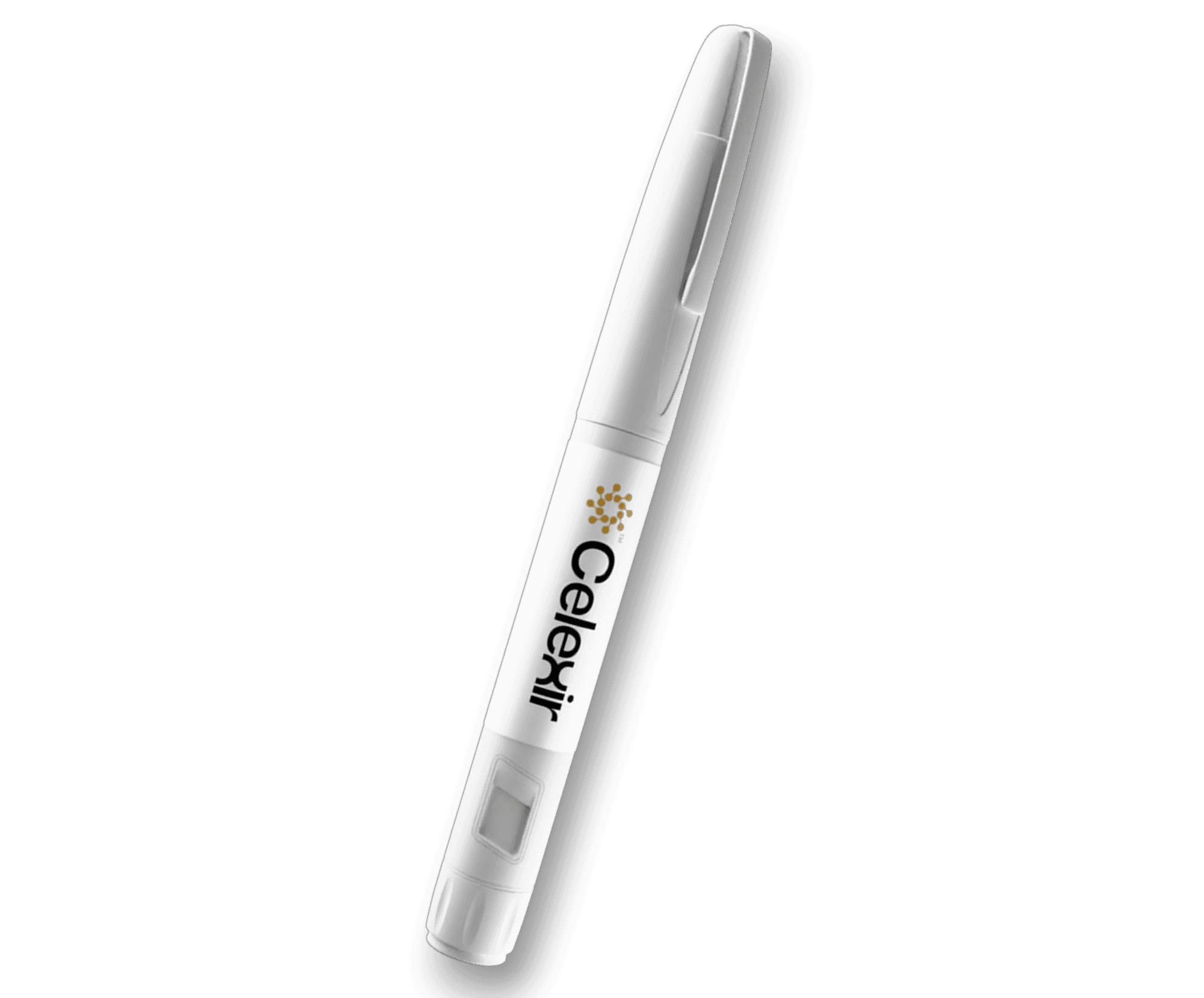
Depending on the peptide and prescribed protocol, administration may utilize pre-filled, stabilized injectable pens designed to simplify subcutaneous delivery while supporting dosing consistency and patient usability.
Treatment frequency and duration are determined according to the individual compound, clinical objective, and practitioner-directed protocol.
Exosome Delivery
Depending on their intended clinical application, exosome products may be delivered through systemic or localized routes.
Administration protocols are determined by qualified practitioners based on the intended application, patient profile, product specifications, and applicable clinical requirements.
From Source to Application
One Standard Across the Entire Product Lifecycle
Sourcing. Processing. Testing. Storage. Documentation. Delivery.
Each stage is connected.
Celexir's quality framework is designed to maintain visibility and control across the product lifecycle—providing our clinical partners with the documentation, traceability, and quality systems expected from a modern regenerative medicine platform.
European standards. Pharmaceutical-grade processes. Complete traceability.